How India Surprised Me: First Timer, David Reid’s Unforgettable Journey
By David Reid, Director of Sales & Marketing MW Tours
Rajasthan unfolded before us like an epic painted in ochre, indigo, and gold — a land where warrior kingdoms rose from the desert, palaces floated on shimmering lakes, and ancient rituals still pulse through the rhythm of everyday life.
From the romantic waters of Udaipur to the sacred ghats of Varanasi, this journey across northern India became not just a passage through geography, but through centuries of legend, artistry, devotion, and empire.
We began in Udaipur, the last capital of the former kingdom of Mewar — perhaps the most fiercely independent of all Rajput states. The rulers of Mewar never considered themselves kings, but custodians of the land on behalf of their clan deity, Sri Eklingji. Their history is one of extraordinary resilience: bloody wars, heroic resistance, dynastic intrigue, and legendary sacrifice. British historian Colonel James Tod once compared the conflict between Mewar and the Mughal Empire to the wars between Greece and Persia.
Our home in the city was the magnificent The Leela Palace Udaipur, where our Grand Heritage Lake View Room overlooked the tranquil waters of Lake Pichola. At sunset, the palace glowed like a marble mirage against the Aravalli Hills.
The following morning, we stepped into the grandeur of the City Palace Museum. Rising above the banks of Lake Pichola, the sprawling palace complex is Rajasthan’s largest, a dazzling fusion of Rajput, Mughal, European, and Oriental architectural styles accumulated over twenty-two generations of rulers. Within its labyrinth of courtyards and balconies lie treasures both regal and eccentric: crystal beds, jewel-encrusted carpets, miniature paintings from the Mewar School, and stories of maharajas who ordered priceless objects only to leave them unopened for a century. A short walk away stood the intricately carved Jagdish Temple, where every inch of stone seemed alive with dancers, musicians, elephants, celestial nymphs, and deities. The artistry was hypnotic — a reminder that devotion in Rajasthan has always been inseparable from craftsmanship.
Later, in the cool gardens of Saheliyon-ki-Bari, fountains whispered among lotus pools and marble pavilions. Built for royal women, the garden was designed to evoke the sound and feeling of monsoon rains in the desert kingdom. Even centuries later, one could still imagine laughter echoing beneath the trees. As evening fell, we boarded a private boat on Lake Pichola. The city shimmered gold against the darkening water while floating palaces emerged like scenes from a dream. Our boat glided toward Jag Mandir, the island palace where the Mughal prince Khurram — later Emperor Shah Jahan — once sought refuge. Fans of the James Bond film Octopussy would recognize the setting instantly; yet in person, the lake felt far more cinematic than fiction.
From Udaipur we drove north toward Jodhpur, stopping en route at the extraordinary Ranakpur Jain Temple. Emerging from the hillside in luminous white marble, the temple seemed almost impossible in its intricacy. Inside were 1,444 uniquely carved pillars — no two alike — supporting a maze of domes, halls, and sanctuaries. Legend claims no one can accurately count them all.
After lunch at King’s Abode in Ranakpur, we continued across the desert plains to Jodhpur, the famed Blue City. Once capital of the kingdom of Marwar — literally “the land of the dead” — Jodhpur rises from the edge of the Thar Desert in a haze of blue-painted homes and sandstone fortifications.
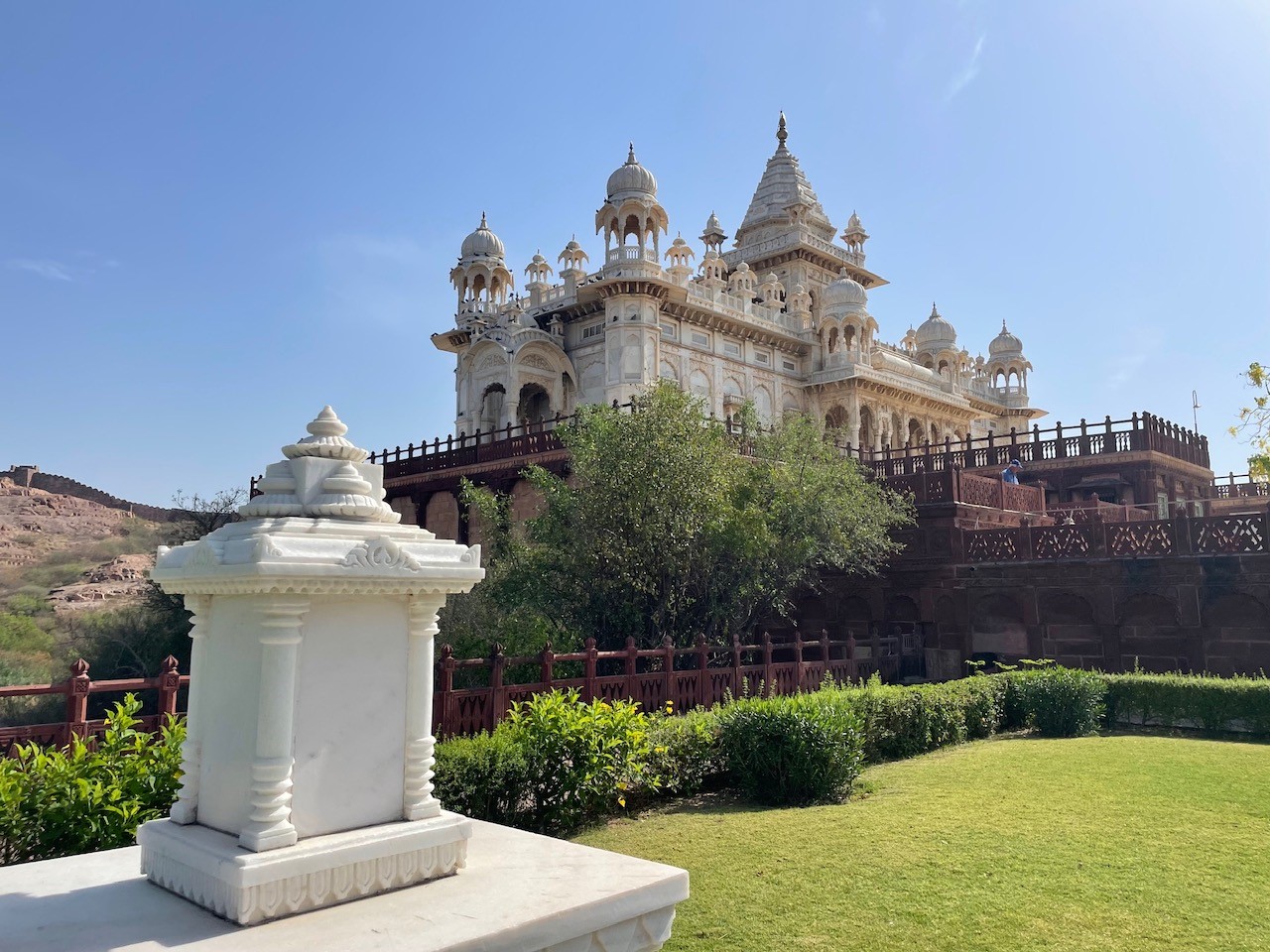
Dominating the skyline is Mehrangarh Fort, one of India’s most imposing citadels. Its massive walls soar above the city, while within them lies a museum filled with royal palanquins, weapons, textiles, and relics from a vanished princely age. Standing atop the ramparts, looking over the sea of indigo houses below, it was easy to imagine armies once marching out beneath the desert sun. Nearby, the marble cenotaph of Jaswant Thada glowed softly against the barren hills, its delicate latticework and domes reflecting a graceful blend of Mughal and Rajput aesthetics. We explored the winding blue lanes of the old city by tuk tuk, weaving through spice markets and crowded bazaars alive with colour and noise.
From Jodhpur we journeyed to Khimsar, where dunes stretched toward the horizon and traditional Rajasthani dhani huts circled a tranquil blue lake. The desert sunset turned the landscape molten gold before we ventured out on an evening jeep safari through the sands.
The next destination was Bikaner, a lesser-known desert city once positioned along the great caravan routes. At the formidable Junagarh Fort, richly decorated halls revealed painted ceilings, lacquered walls, mirrored chambers, and even a World War I biplane gifted to the Maharaja. Unlike most forts in Rajasthan, Junagarh rises directly from the desert plain rather than a hilltop, giving it a unique presence amid the arid landscape.
We had the luxurious pleasure of staying at the Narendra Bhawan which is a strikingly intimate luxury hotel housed in the former residence of Maharaja Narendra Singhji, the last reigning Maharaja of Bikaner. Unlike Rajasthan’s grand ceremonial palaces, the property feels deeply personal, blending royal heritage with Art Deco glamour, colonial influences, and contemporary sophistication inspired by the Maharaja’s travels. Rich jewel-toned interiors, vintage curios, velvet furnishings, and individually designed rooms create the atmosphere of an elegant private residence rather than a traditional hotel.
After crossing Rajasthan’s vast highways to Jaipur, we escaped briefly for an overnight stay into the countryside at Samode Palace — a 475-year-old palace hidden among the Aravalli Hills. Frescoed halls, mirror-work chambers, and candlelit courtyards made it feel less like a hotel and more like stepping into a living royal residence. A must for a night to really appreciate a bygone age of living.
Continuing eastward, we stopped at the astonishing Chand Baori, one of the world’s largest and most beautiful stepwells. Descending twenty metres into the earth, its 3,500 perfectly symmetrical steps formed an almost surreal geometric pattern — both architectural masterpiece and ingenious solution to Rajasthan’s harsh climate.
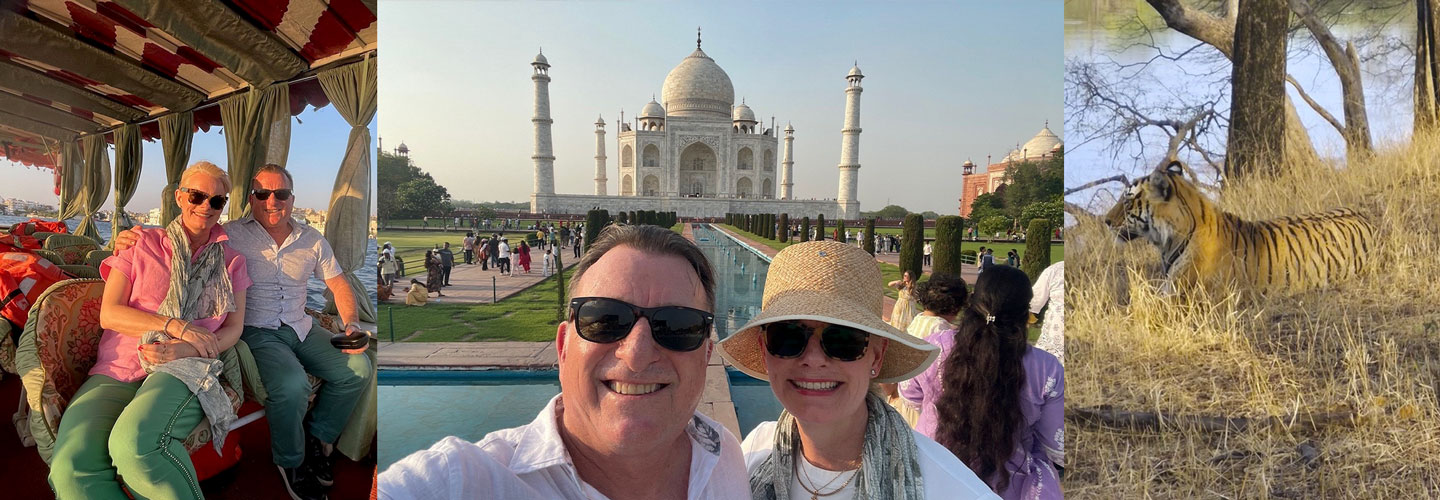
Soon the terrain changed as we entered Ranthambore National Park, one of India’s premier tiger reserves. Surrounded by rocky hills and ancient ruins, the park possesses a wild beauty unlike anywhere else on the journey. Dawn safaris carried us through misty forests where langurs called from the trees and peacocks crossed dusty tracks. Every rustle in the grass carried the possibility of a tiger emerging from the wilderness.
From the jungle we drove to Agra, once the capital of the Mughal Empire. There, the incomparable Taj Mahal revealed itself slowly through crowds and morning haze — luminous white marble perfectly mirrored in long reflecting pools. Built by Shah Jahan for his beloved wife Mumtaz Mahal, the monument transcends photography; its symmetry, inlay work, and quiet emotional gravity are overwhelming in person. I know a cliché, but it truly is impressively beautiful and extremely thought provoking
Nearby, Agra Fort offered another perspective on Mughal grandeur. Massive red sandstone walls concealed elegant marble halls and royal pavilions that charted the evolution of imperial taste across generations of emperors.
An early morning Vande Bharat train carried us onward to Jhansi and then to the medieval town of Orchha.
On the banks of the Betwa River, the towering Orchha Fort stood almost forgotten by time, its faded murals and palaces recalling the glory of the Bundela Rajputs.
By evening we reached Khajuraho, famed for its extraordinary temples built between the 10th and 11th centuries by the Chandela dynasty. At the Western Group of Temples, especially Kandariya Mahadeva Temple, the stone walls unfolded into a riot of sculpture — gods, dancers, warriors, musicians, mythical beings, and the famously sensual carvings that have made Khajuraho renowned worldwide. Yet beyond the erotic imagery lies something far more profound: an exuberant celebration of life itself.
Our final destination was Varanasi, one of the world’s oldest continuously inhabited cities and the spiritual heart of India. Here, life and death coexist openly along the sacred Ganges.
We explored the labyrinthine lanes of the old city before visiting Sarnath, where Buddha delivered his first sermon after attaining enlightenment. Ancient stupas and monastery ruins still draw pilgrims from around the world seeking connection to that pivotal moment in Buddhist history. On a normal day, 250,000 visitors will go to Varanasi!!
But it was the evening Ganga Aarti at Dashashwamedh Ghat that left the deepest impression. As darkness fell, priests in flowing robes performed synchronized rituals with giant flaming lamps while bells rang, conch shells sounded, and chants echoed across the river. Firelight danced on the water as thousands gathered in reverence along the ghats.
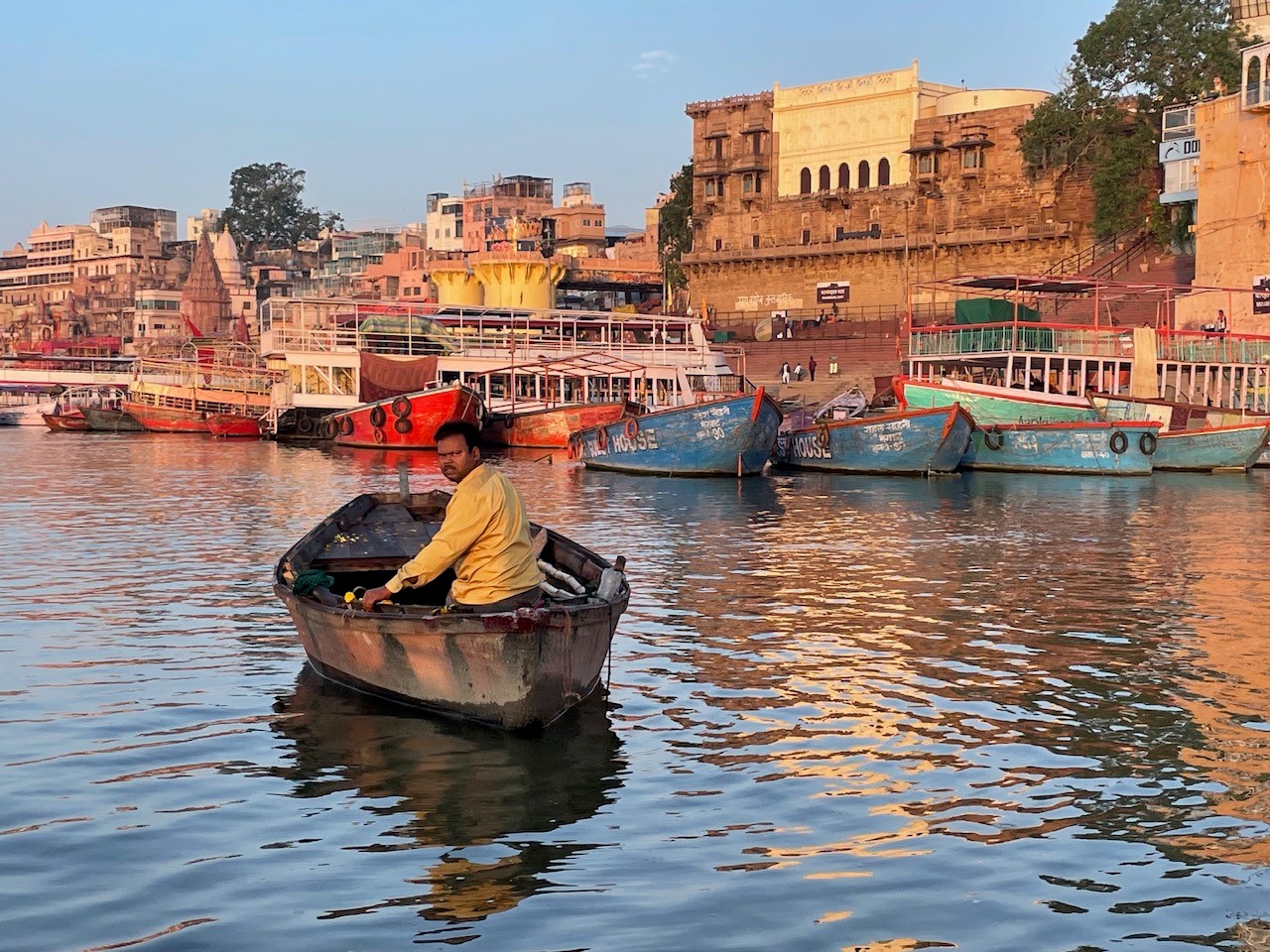
The next morning, before dawn, we boarded a small wooden boat on the Ganges. Mist drifted across the river while the city slowly awakened: pilgrims descending the steps for ritual baths, priests reciting prayers, sadhus wrapped in saffron robes meditating silently at the water’s edge. As the first rays of sunlight illuminated the ghats, Varanasi revealed itself not simply as a city, but as an eternal theatre of faith.
This journey through Rajasthan and beyond was more than a collection of monuments and landscapes. It was a passage through dynasties, religions, empires, and traditions that continue to shape India today — a reminder that history here is never confined to museums. It lives in the lakes of Udaipur, the deserts of Marwar, the jungles of Ranthambore, and the sacred waters of the Ganges.

Jodhpur & Ranakpur – Fortresses and Marble Masterpieces
Explore the dramatic Blue City of Jodhpur, dominated by the mighty Mehrangarh Fort, before visiting the spectacular Ranakpur Jain Temple — a masterpiece of marble architecture famed for its 1,444 uniquely carved pillars.
Tigers & the Taj – Ranthambore to Agra
Journey from the wild landscapes of Ranthambore National Park, home to the elusive Bengal tiger, to the timeless beauty of the Taj Mahal in Agra — one of the world’s greatest monuments to love and Mughal grandeur.


Hidden Treasures of Rajasthan – Samode Palace & Chand Baori
Step into Rajasthan’s hidden wonders with an overnight stay at the opulent Samode Palace and a visit to the astonishing Chand Baori stepwell, where perfectly symmetrical staircases descend deep into the earth in one of India’s most remarkable architectural achievements.
Spiritual India – Khajuraho & Varanasi
One of the most striking features of Khajuraho temples is their extensive and detailed erotic carvings. These depictions are not merely artistic indulgences but are believed to symbolize the celebration of life, love, and the divine, reflecting the complex interplay between spirituality and sensuality in ancient Indian culture.

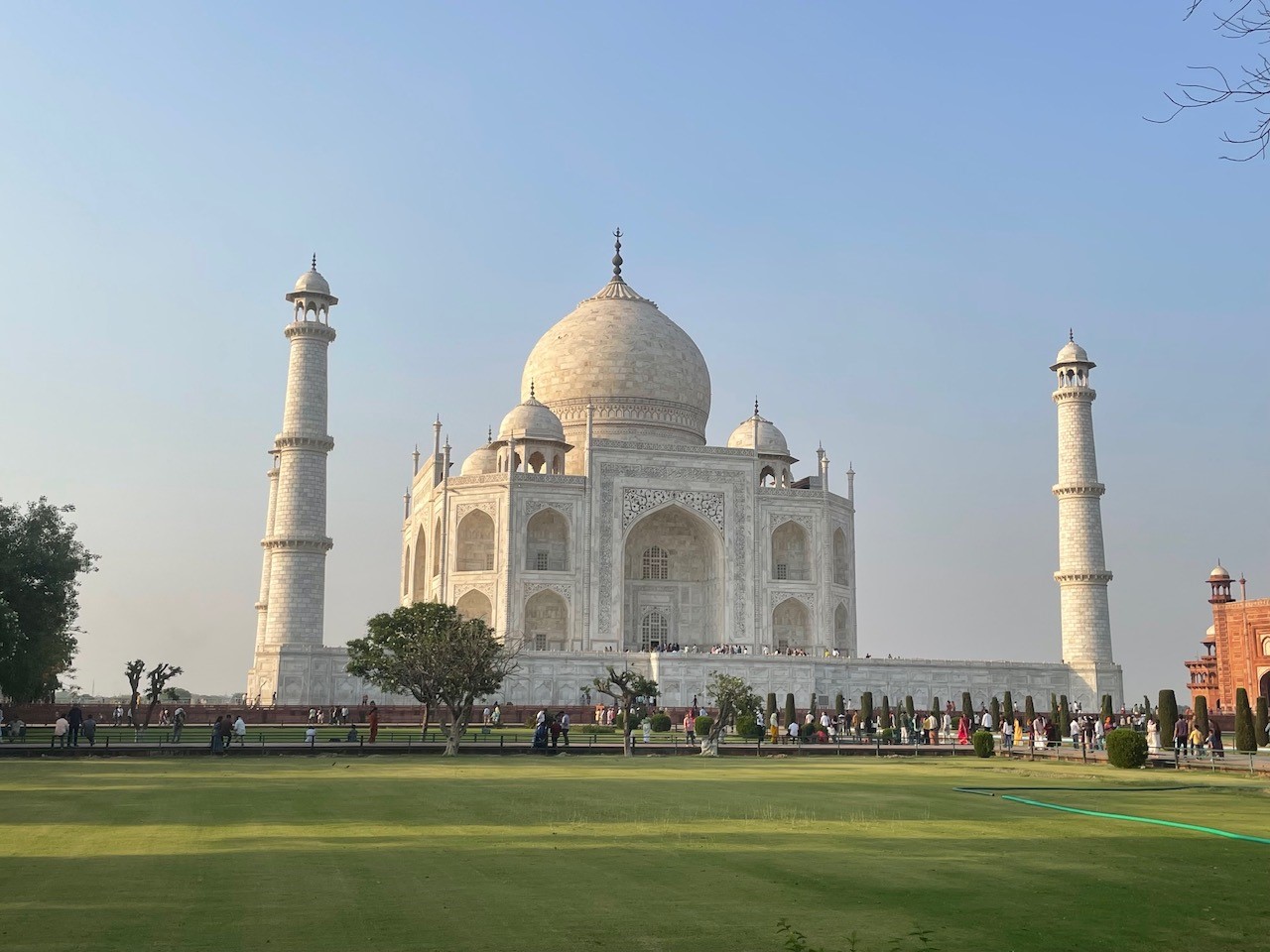
The Taj Mahal – India’s Eternal Masterpiece
Witness the breathtaking beauty of the Taj Mahal, India’s most iconic monument and one of the world’s greatest architectural achievements. Built by Emperor Shah Jahan in memory of his beloved wife Mumtaz Mahal, the gleaming white marble mausoleum captivates with its perfect symmetry, intricate inlay work and timeless romance — an experience far more extraordinary in person than any photograph can capture.
The Ganges – Sacred Life Along the River
Experience the spiritual heart of India along the sacred Ganges River in Varanasi, where centuries-old rituals unfold daily on the ancient ghats. From the mesmerising evening Ganga Aarti ceremony to peaceful sunrise boat rides past pilgrims, priests and riverside temples, the Ganges offers a powerful and unforgettable glimpse into India’s enduring traditions and devotion.

Travel News
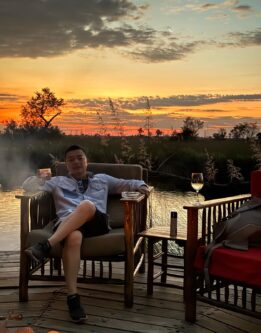
Botswana Educational Tour Journal – Desert & Delta Safaris | May 2026
Sri Lanka’s 30 Day Visa-Free For Aussie Travellers
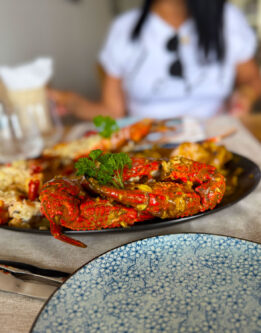
A Family Adventure Through Sri Lanka
Sampling the Luxury Panorama with David Reid, Director of Sales and Marketing, MW Tours